
Solo Mining vs. Pool Mining: Which is Better?

Thinking about Bitcoin mining but feeling stuck at a crossroads? You’re not alone. One road promises independence, privacy, and massive rewards. The other offers teamwork, consistency, and far less stress. That fork in the road is known as Solo Mining vs. Pool Mining, and choosing the right path can mean the difference between excitement and exhaustion.
Let’s ditch the fluff and talk real numbers, real risks, and real expectations—blog-style, human-style, and no robotic nonsense.
Understanding Bitcoin Mining Basics
What Is Cryptocurrency Mining?
Bitcoin mining is the process of validating transactions and securing the blockchain. Miners race to solve cryptographic puzzles, and the winner earns a block reward. Think of it like a lottery where computing power buys you more tickets. Simple idea—brutal competition.
Why Mining Still Matters Today
Mining keeps Bitcoin decentralized and secure. Even as difficulty rises and margins tighten, mining remains essential. Without miners, Bitcoin simply doesn’t work.
What Is Solo Mining?
How Solo Mining Works
Solo mining means you’re completely independent. No pools. No partners. No shared rewards. You run your own Bitcoin node, validate transactions yourself, and attempt to mine blocks on your own hardware.
If you succeed? Boom—you take 100% of the block reward, currently 3.125 BTC plus transaction fees. No splitting, no fees, no compromises.
Hardware and Technical Requirements
Here’s where things get real. Solo mining requires:
- ASIC miners ($2,000–$5,000 each)
- A full Bitcoin node
- Strong networking knowledge
- Cooling systems and monitoring tools
- Constant uptime
You’re the IT department, the electrician, and the strategist—rolled into one.
Electricity and Infrastructure Costs
Power costs can make or break solo mining. In the U.S., electricity averages $0.10–$0.13 per kWh, and inefficient setups bleed money fast. Cooling, ventilation, and reliability aren’t optional—they’re survival tools.
Benefits of Solo Mining
Full Rewards and Total Independence
The biggest draw? You keep everything. No pool fees. No revenue sharing. When luck strikes, it strikes hard.
Privacy and Decentralization
Solo mining offers unmatched privacy. No accounts, no data sharing, no coordination with others. You choose which transactions go into your block, aligning perfectly with Bitcoin’s decentralized roots. It’s old-school, rebellious, and incredibly satisfying.
Solo Mining Drawbacks and Risks
Let’s be honest—solo mining is a long shot.
With the network hash rate exceeding 500 EH/s, a miner running 100 TH/s has less than a 0.0001% chance of finding a block on any given day. That’s not pessimism—that’s math.
Add unpredictable payouts, constant expenses, and technical headaches, and solo mining becomes a high-risk, all-or-nothing game.
Best Hardware Options for Solo Miners
Some miners embrace the “lottery” approach using ultra-efficient, low-power devices:
NerdMiner NerdQaxe+
- Price: $239.99
- Hashrate: 5 TH/s
- Power: 50W
- Effiencency: 15 J/TH
Lucky Miner LV08
- Price: $119.99
- Hashrate: 5 TH/s
- Power: 140W
- Effiencency: 67 J/TH
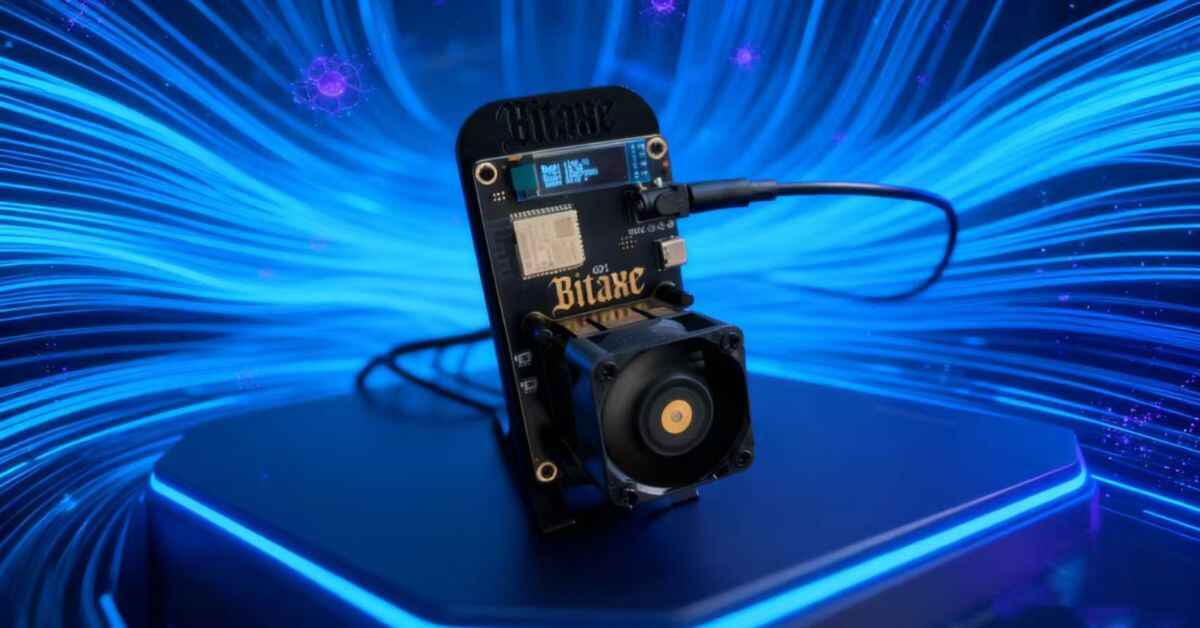
Bitaxe Gamma 601
- Price: $59.99
- Hashrate: 2 TH/s
- Power: 17W
- Effiencency: 014 J/Gh
Bitaxe SupraHex 701
- Price: $1799
- Hashrate: 2 TH/s
- Power: 90W
- Effiencency: 15 J/TH
These won’t dominate the network, but they’re fun, educational, and surprisingly efficient.
Read More: 8 Solo Bitcoin Miners Who Beat the Big Pools
What Is Pool Mining?
How Pool Mining Works
Pool mining is teamwork in action. Miners combine their computing power to increase the odds of finding blocks. When the pool succeeds, rewards are split based on each miner’s contribution.
The pool operator handles the heavy lifting—nodes, validation, coordination—while you focus on running your hardware.
Benefits of Pool Mining
Consistent Payouts
Instead of waiting months or years, pool miners receive regular payouts, often daily. That consistency makes it far easier to cover electricity costs and plan ahead.
Lower Risk and Easier Entry
You don’t need a warehouse of ASICs. Even a single miner can earn steady rewards. Pool fees usually range from 0.7% to 3%, a small tradeoff for predictability and peace of mind.
Choosing the Right Mining Pool
Not all pools are created equal. Before joining, consider:
- Pool fees(lower is better)
- Payout models(PPS, PPLNS, proportional)
- Uptime and transparency
- Pool size
- Server location and latency
The right pool can significantly improve both profitability and sanity.
Solo Mining vs. Pool Mining: A Direct Comparison
Risk, Rewards, and Reality
This is where Solo Mining vs. Pool Mining becomes crystal clear.
- Solo mining = high risk, massive reward potential
- Pool mining = low risk, steady income
One feels like buying a single lottery ticket. The other feels like earning a paycheck.
Cost, Scalability, and Skill Level
Solo mining demands deep technical knowledge and constant reinvestment. Pool mining scales naturally and welcomes beginners. As difficulty rises, pools adapt automatically—solo miners must keep upgrading just to stay relevant.
Which Mining Strategy Is Right for You?
Ask yourself:
- Do I value independence or stability?
- Can I handle long periods with zero payouts?
- Am I technically confident—or still learning?
If you’ve got capital, patience, and nerves of steel, solo mining might suit you. If you want predictable income and lower stress, pool mining is the smarter move.
In the ongoing debate of Solo Mining vs. Pool Mining, the “best” option is the one that fits your goals, budget, and mindset.
Conclusion
Bitcoin mining isn’t dead—it’s just evolved. Solo mining offers freedom, privacy, and the thrill of total ownership, but it comes with serious risk. Pool mining trades glory for consistency, making it the practical choice for most miners today.
Whichever path you choose, remember: mining is a long game. Stay efficient, stay informed, and don’t chase hype over math.
FAQs
- Is solo mining still profitable today?
Yes—but only with significant hash power, low electricity costs, and a lot of patience. - Is pool mining better for beginners?
Absolutely. Pool mining is beginner-friendly and far less risky. - Do mining pools control Bitcoin?
No single pool controls Bitcoin, but decentralization improves when miners spread across multiple pools. - What happens during Bitcoin halving events?
Block rewards are cut in half, increasing competition and making efficiency critical. - Can I switch between solo and pool mining?
Yes. Many miners experiment with both as their skills and resources grow.